10 Years at ZeniMax Online Studios
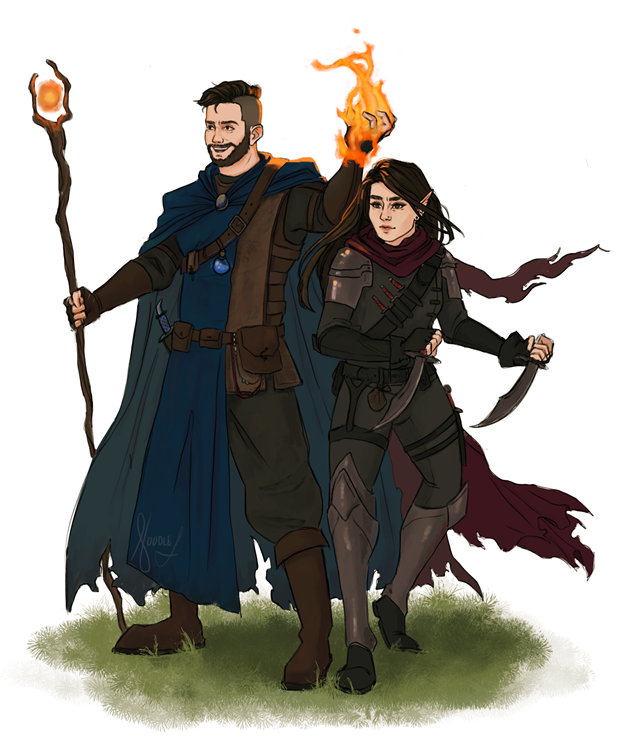
Painted by my talented partner, Sam, who I got to work with for many years! How cool is that?
10 years ago, a relatively green and excited me took a job at ZOS to do graphics work on The Elder Scrolls Online. At the time, the game was in post-PC-launch challenges with a mixed reception, a dangerous time to join a game company! But I was so enamored with TES from a childhood inspired by Oblivion that I leapt at the opportunity headfirst.
I remember hiding my Oblivion tattoo, worrying that people would think I was some strange adoring fan infiltrating the company. I guess I kinda was!
As the game turned around and became a critical and commercial success, I was given pressing game bugs and new features to work on, while I also played the game obsessively on my own time, letting myself fall in love with the work and the team building it.
What I loved about ZOS was that opportunities in the programming department came around pretty frequently, and often unexpectedly. The first and most transformative for me was when ZOS (probably prematurely) ended contracts with Iron Galaxy on the console ports of the game, after they'd shipped. There was suddenly a huge gap in console development experience on what was (by that point) an extremely young programming team.
I got offboarding training from IG's own Dan Coleman on their way out. I was embarrassed by how much I didn't know, but he was so patient with me. What he taught, and the impression he made on me, was profoundly impactful to the kind of programmer I am today.
There's this tendency to feel safe when you're an unsure budding programmer surrounded by many experienced seniors. Having these bedrock developers makes the scariest bugs less intimidating, makes the must-work features more of a sure thing than a question mark. With ZOS's senior talent exodus post-PC-launch followed by IG contracts ending, this was the "say goodbye to your training wheels"
moment of my career (and many others on our programming team). My lead Matt at the time told me "I hired you because you can do the work, so you don't have to ask me how you should do things, just go do them!"
What followed were two years of hard, heads down work. I became the "client stability" developer, doing the necessary janitorial work that it takes to keep a live game running on many platforms while new systems and content are added to it. In ESO's case, four major updates per year, every year. Days were filled with the latest multithreading related crash, heap corruption, deadlocks, stalls,
frame spikes, save bugs, patch size issues, the perf degradation in new and unexpected areas as the game grew, the memory bloat (in every respect) of an ever-evolving game that needed to maintain its min-spec. Eventually these responsibilities were too many to be sustainable, and what formed was a small team in cooperation with then-Nemesys Games, now known as ZOS Hungary. These were (are)
some of the best programmers I've ever gotten to work with, and together we made ESO's tech sustainable.
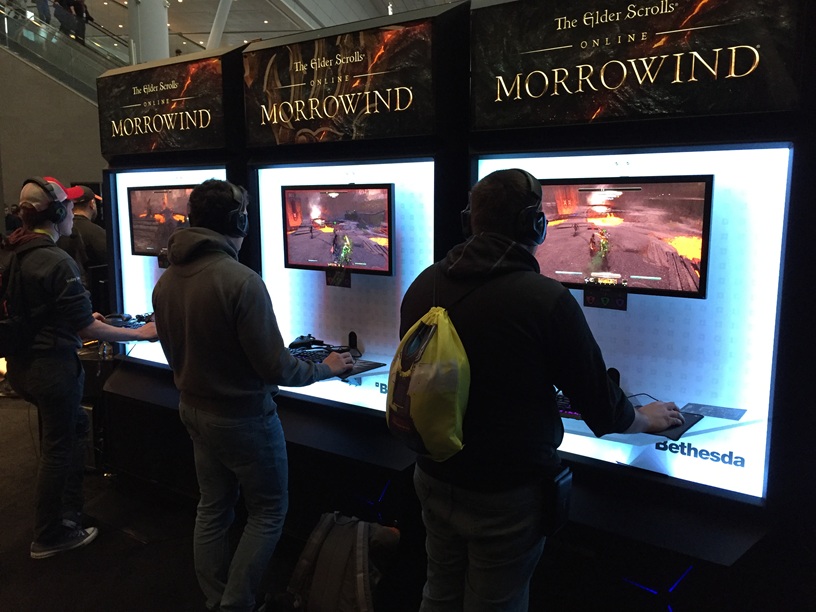
PAX East 2017. If you get the chance to go see people play your game in person, I highly recommend it.
On the side, I'd been building renderers at home. A lot of them. D3D12, Vulkan, cutting my teeth with PBR and compute shaders (these were new at the time, relatively speaking). I think it wasn't until the fourth or fifth major rewrite that I had a personal renderer that I actually enjoyed working with. My thought was that these new APIs were a gateway to better ways of working, but that learning to wrap them thoughtfully
would have a lot to do with how effectively they could be used. I spent every minute I had outside of work grinding these things, over and over, throwing things away, starting over. I somewhat regret to say that this, combined with work, was pretty all-consuming. I missed out on connecting more with people, with nature. Looking around me at how much I had (and still have!) to learn to be better and pour love into games for players,
it felt like this would be the only way I could get there.
In Study Hall's interview "How DnD Became a Career," Brennan Lee Mulligan relates this to being on a carousel where, depending on your location on the track, you might have greater or fewer attempts to grab the brass ring. "I don't know when the brass ring is going to come up, I don't know how high it's going to be, so I need to jump and hover in the air […] at the most extended jump-point for as long as possible,
because I don't have control over when that ring comes around." This best describes how I felt during these years, and despite what I missed out on, I was having fun too, and felt so passionate about dedicating myself to this that I believed it would be worth it.
My brass ring came around in the form of an unexpected offer to become the graphics lead, and be the initial graphics programmer making a new engine for a new, ambitious online game. The practice had paid off, and while I was nervous I also felt prepared to seize the opportunity. How often does anyone get to do this anymore? Certainly rarely these days in the UE5 era, which began uncomfortably deep into our new engine's development.
Due to NDAs I unfortunately will never be able to share the details along the journey, from first triangle to a competitive modern renderer built by a small and scrappy team I had the absolute privilege to build. A team of hardworking graphics developers low on ego and high on talent and ambition. We worked years together to build something we thought players would love, and dreamed of how they would feel walking around our world.
In the end after the publisher rug pull, the only public acknowledgement of our work will be Jason Schreier's article calling it "slick looking with alluring visuals."
Although I'd never trade away this experience for anything, the way it ended is going to haunt me, after so many years of obsession. Every waking hour of my day, every day, was filled with it. My partner Sam was so understanding that this was my limit-test opportunity, and gave me all the space to obsess about it, to grind, the late nights and weekends spent on the burnout rollercoaster repeatedly reigniting to squeeze out just a bit more. I'm glad
I had the chance to do this once in my life.
I still get these shockwaves of emotions out of nowhere most days, since the cancellation announcement. I loved our graphics team, the rhythm we had working together, and I'm so damn proud of what we built.
The treatment for these blues (along with time to rest of course) has been coming in the form of meeting teams at other studios with opportunities to keep pouring this love of games into a new vessel. I feel deeply fortunate to have met so many in the wake of these layoffs that reminded me there's plenty of good folks out there who want to focus on making great games and making players happy.
I've spent almost my entire career on MMOs. I know "live service" games come with plenty of stigma these days, most of it understandable of course, I'm not ignorant of what happens in this space. What I think a lot of people miss from outside though, is that these games form important communities. Truly massive, global communities of millions of people from all walks of life who meet their best friends in-game,
who fall in love, who comfort and support each other and form lifelong bonds that eventually transcend the games they play. Especially in the current online era, is this not such a beautiful thing to contribute to?
I was fortunate to meet with several studios that understand love for their communities in ways few do, who understand being generous with players and haven't forgotten how fortunate we are to make games for them. I'm joining one of them next month, and I know this new chapter will be reinvigorating!